how to get a wedding loan in India: eligibility, documents and costs

a wedding loan is a personal loan used to cover marriage-related expenses. it is unsecured, meaning no collateral or guarantor is required.
the funds can be used for any wedding-related expense: venue booking, catering, jewellery, outfits, decorations, photography, travel, and even honeymoon costs. since it's a personal loan, lenders do not restrict how the money is spent, and no marriage proof is required to apply.
key features of wedding loans
| feature | details |
|---|---|
| loan amount | up to ₹50 lakh (ICICI), ₹35 lakh (Tata Capital), ₹30 lakh (SMFG) |
| interest rates | starting at 10.85%: 13% p.a. |
| tenure | 12 to 72 months |
| processing fee | up to 2% (ICICI), up to 5% (Tata Capital) of loan amount + GST |
| collateral required | no: unsecured loan |
| disbursal time | typically 24 to 48 hours after approval |
interest rates and charges across lenders
| lender | interest Rate (p.a.) | processing Fee | max Loan |
|---|---|---|---|
| ICICI Bank | 10.85% onwards | up to 2% + GST | ₹50 lakh |
| Tata Capital | 10.99% onwards | up to 5% + GST | ₹35 lakh |
| SMFG India Credit | 13% onwards | varies | ₹30 lakh |
| PNB | 10.60% onwards | up to 1% | ₹20 lakh |
additional charges to watch: Foreclosure charges (4.5 to 6.5% of outstanding principal), penal charges (3% per month on defaulted amounts, annualised at 36%), and dishonour charges (₹600 per bounced instrument).
eligibility criteria
age
applicants must typically be between 21 and 60 years of age. some lenders like ICICI allow applicants up to 58 years.
credit score
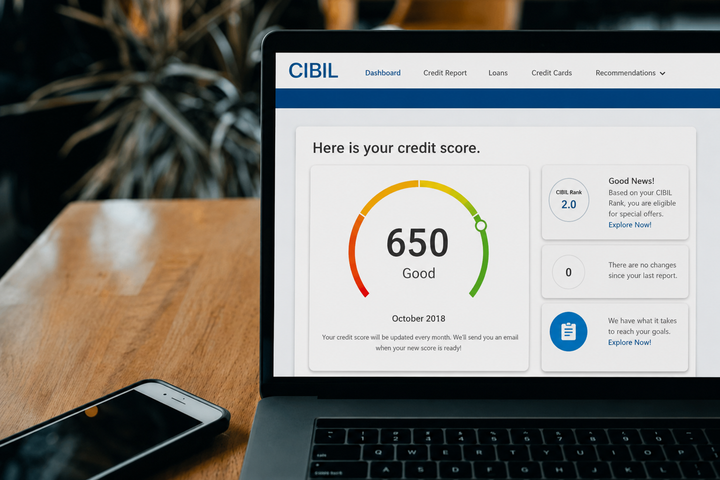
A credit information bureau (India) limited (CIBIL) score of 750 or higher is preferred for the best rates. some lenders accept scores of 700 or above, and borrowers with no credit history ("NH" or "-1") may also apply.
income
minimum monthly income requirements vary by lender and location.
employment
existing obligations
lenders evaluate the Fixed Obligation to Income Ratio (FOIR) total equated monthly instalments (EMIs) (existing + proposed) should not exceed 30% to 50% of net take-home salary.
documents required
common documents (all applicants)
- PAN Card: Mandatory for all applicants
- Aadhaar Card: Mandatory
- bank statements: Last 3 to 6 months
- passport-sized photographs: 2 to 3 copies
for salaried applicants
- salary slips for the last 2 to 3 months
- Form 16 or ITR for the last 2 years
- employment certificate (if required)
for self-employed applicants
- ITR for the last 2 years
- audited financials (balance sheet and P&L statement)
- GST returns (last 12 months)
- business proof: registration certificate, trade license, or partnership deed
- office address proof
pre-approved offers: faster route
existing customers with a good repayment track record may receive pre-approved wedding loan offers. in such cases, the loan amount is credited within seconds, and no fresh documentation is required.
tax implications
wedding loans are personal loans. the interest paid does not qualify for any tax deduction under the Income Tax Act. unlike home loans, there is no benefit under Section 24 or Section 80C. the entire repayment is made from post-tax income.
alternatives to consider
credit cards: For smaller expenses, credit cards with zero-interest EMIs can work. but credit cards charge 36 to 48% annual interest on outstanding balances, much higher than personal loans starting at 10.85%.
gold loans: gold jewellery can support a gold loan at a lower interest rate with faster approval. being secured, it depends less heavily on the credit score.
savings and dedicated wedding fund: Cash is always the cheapest option: no interest, no EMIs. a dedicated wedding savings account avoids the cost of borrowing entirely.
government schemes: State governments run their own marriage assistance programs. Telangana offers Kalyan Lakshmi at ₹1,00,116. Andhra Pradesh has YSR Shadi Tohfa at ₹1,00,000. Karnataka provides Scheduled Caste Marriage Assistance at ₹50,000. these are direct cash transfers, not loans. they go to eligible families without any repayment obligation. each state has different rules and income limits. the local social welfare department has the full list of schemes and application forms. worth checking before applying for any loan.
application process: step by step
step 1: check eligibility
use the lender’s online eligibility checker, entering the loan amount, monthly income and employment type to see whether the applicant qualifies.
step 2: gather documents
keep permanent account number (PAN), Aadhaar, salary slips/ITR, and bank statements ready. digital lenders may require only PAN, Aadhaar, and a selfie.
step 3: apply online
visit the lender's website or mobile app. fill in the application form with personal, employment, and income details.
step 4: complete verification
submit documents for verification. Aadhaar-based e-KYC happens instantly via one-time password (OTP). some lenders may require video know your customer (KYC).
step 5: receive approval and disbursal
once approved, the loan amount is credited to the bank account typically within 24 to 48 hours.
frequently asked questions
1. what is the minimum CIBIL score for a wedding loan?
most lenders prefer a score of 750 or higher for the best rates. some accept 700 or above. borrowers with no credit history ("NH" or "-1") may also apply, subject to other criteria.
2. what is the interest rate for a wedding loan in India?
interest rates start from 10.85% (ICICI) to 13% (SMFG India Credit) per annum, depending on credit profile, income stability, and lender policy. Tata Capital offers rates starting at 10.99%.
3. what documents are required for a wedding loan?
PAN (mandatory), Aadhaar, salary slips for the last 2 to 3 months (salaried) or income tax return (ITR) and audited financials (self-employed), and bank statements for the last 3 to 6 months.
4. can self-employed individuals get a wedding loan?
self-employed professionals and business owners can apply. they need to submit ITR for the last 2 years, audited financials, goods and services tax (GST) returns, and business proof. the eligibility is assessed based on income stability and business continuity.
5. can a wedding loan be taken jointly?
joint applications are common. adding a co-applicant with a strong income can increase eligibility and potentially lower the interest rate. parents can also apply or act as co-applicants.