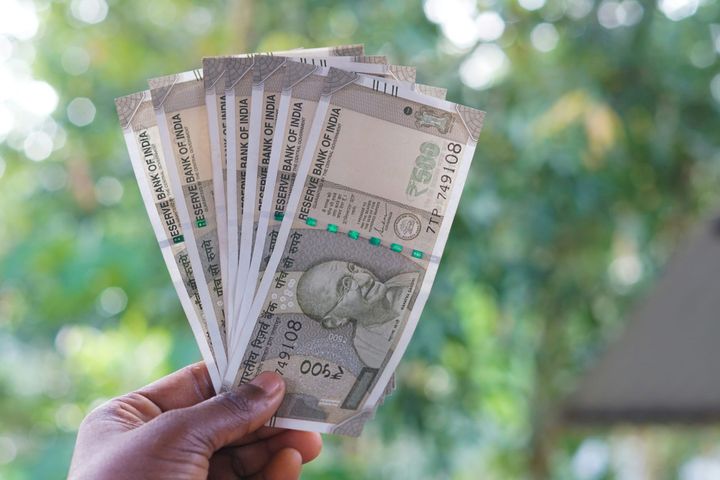
quick cash loans: hidden fees and charges you should check before borrowing

a processing fee covers the lender's cost of underwriting the loan, verifying documents, and running credit checks before disbursal. this is typically deducted upfront from the disbursed amount rather than added to the EMI.
processing fees usually range from 1% to 3% of the loan amount. some lenders charge up to 4.72%. for example, on a ₹2 lakh loan, the actual amount credited could be somewhat lower than ₹2 lakh depending on the fee applied.
on top of the processing fee, an 18% goods and services tax (GST) is also applicable. this means borrowers need to account for both the fee and the tax when calculating how much they actually need to borrow. if someone needs exactly ₹2 lakh for a specific expense, they may want to request a slightly higher loan amount to account for the fee.
the interest rate trap not what it seems
instant loans carry high rates of interest typically around 30 to 36% annualised. some may appear lower at first glance, but once fees and the short repayment window are combined, the effective cost of borrowing can be much higher.
pre-approved or instant digital loan messages emphasise speed but underplay the total cost. personal loan rates from regulated banks and non-banking financial companies (NBFCs) can be about 10% to 24% per year depending on the borrower's credit profile. however, the effective annual cost of many short-tenure digital loans can be materially higher once processing fees, convenience charges, GST, and late payment penalties are factored in.
in some cases, fees are deducted upfront while interest is calculated on the full sanctioned amount, which raises the effective borrowing cost. borrowers should focus on the Annual Percentage Rate and the total repayment amount, not just the equated monthly instalment (EMI).
short tenures the hidden cost multiplier
a common feature of many instant loan apps is the short repayment period. some loans have tenures of just two or four weeks. borrowers are generally supposed to pay the interest, fees, and principal in a short period of some days to a few weeks.
at first glance, the interest rate may look manageable. but once the fees and short repayment window are combined, the effective cost of borrowing can be much higher than it appears. short payment terms can strain cash flows significantly, particularly for borrowers with irregular incomes.
this is one reason many borrowers find themselves taking a second loan simply to repay the first. when payment terms interfere with other financial commitments, borrowers tend to borrow again, which can trap them in a vicious debt cycle.
prepayment and foreclosure charges
closing a loan early often comes with a penalty. foreclosure or part-prepayment charges on a personal loan typically run up to 4% on the principal outstanding at the time of closure. if a lock-in period applies typically up to 12 months from the first EMI foreclosure attempted during that window may attract a higher charge.
prepayment penalties usually range from 2% to 5% of the outstanding amount. a further charge may apply if the loan is being taken over by another financier rather than closed with the borrower's own funds.
an 18% GST also applies to the prepayment charge. this matters most for anyone planning to repay a loan quickly once finances improve coming into extra funds does not automatically mean foreclosure is free.
late payment and bounce charges
missing an EMI brings two consequences. first, the financial side penal charges apply on the instalment in arrears, calculated separately from the regular interest rate. if the missed EMI was paid through a cheque, ACH, or ECS mandate that failed, a bounce charge is also added.
late payment penalties typically range from ₹500 to ₹1,500 per instance or a percentage of the overdue amount. bounce charges can range from ₹300 to ₹750 per bounced payment.
the longer-lasting consequence is the impact on the credit score. a missed EMI gets reported to credit information companies and shows up on the credit report, affecting the score and making future borrowing considerably harder regardless of how quickly the penal charges themselves are cleared afterward.
hidden fees borrowers often overlook
beyond the major charges, several smaller fees can add up:
- documentation fees: Collected for preparing, verifying, and maintaining loan documents.
- stamp duty: A tax paid to the state government for registering the loan agreement. the amount varies by state and loan value.
- administrative charges: Cover internal processing, account setup, record maintenance, and service handling.
- loan cancellation fees: if a loan is cancelled once approved or disbursed, a fixed percentage of the loan amount may be charged.
- loan modification fees: if changes are requested to the original loan terms like tenure or interest rate a fee may apply.
individually, these charges may appear small. but when combined, they can significantly increase the total borrowing cost.
what RBI requires lenders to disclose
the Reserve Bank of India has tightened rules around digital lending to protect borrowers. under the RBI's digital lending rules, regulated lenders must clearly disclose the total cost of the loan before the borrower accepts it. this includes the interest rate, processing fees, and the total repayment amount.
borrowers must receive a Key Fact Statement with clearly stated terms, including interest rates, fees, and penal charges. the KFS must be provided upfront, detailing the annual percentage rate and all charges. absence of this disclosure or incomplete cost clarity should be treated as a red flag.
what to check before accepting a loan
before accepting a loan, borrowers should verify whether the loan is being issued by a regulated bank or NBFC. some apps are only technology platforms that connect borrowers to lenders.
the disbursed amount should be examined carefully. the amount credited to the account may differ from the sanctioned amount. if they differ, the difference reflects upfront charges.
the total repayment amount should be reviewed. the loan summary should show the full amount that must be repaid not just the interest rate or EMI.
the annual percentage rate should be checked. this reflects the total cost of the loan, including all fees and charges, not just the headline interest rate.
the tenure should be reviewed. borrowers should confirm that the repayment period aligns with monthly cash flows and that repayment obligations are manageable.
app permissions should be evaluated. borrowers should be cautious if an app seeks access to contacts, gallery, or SMS data beyond what is necessary for underwriting and servicing the loan.
the irony of digital lending is that it is designed to remove waiting time. spending a few extra minutes reading the loan summary can prevent problems later.
frequently asked questions
1. why is the amount credited to my account lower than the approved loan amount?
many digital lending platforms deduct charges upfront before transferring the loan. processing fees, platform fees, documentation charges, and GST on those fees can be subtracted from the sanctioned amount. so if the app shows a ₹20,000 loan, the amount that actually lands in the account could be ₹18,500 or ₹19,000. the problem is that the repayment schedule is often calculated on the full sanctioned amount, not the smaller amount credited.
2. what is the typical interest rate on a quick cash loan?
instant loans carry high rates of interest typically around 30 to 36% annualised. the effective annual cost can be materially higher once processing fees, convenience charges, GST, and late payment penalties are factored in. the annual percentage rate (APR) gives a more accurate picture of the total cost.
3. what fees should I check for before accepting a quick cash loan?
borrowers should check the processing fee (usually 1 to 3% of the loan amount, plus 18% GST), prepayment or foreclosure charges (2 to 5% of the outstanding amount), late payment penalties (₹500-₹1,500 or 2 to 3% of overdue amount), bounce charges (₹300-₹750 per failed transaction), and the annual percentage rate.
4. how do short tenures increase the cost of borrowing?
short repayment periods sometimes just a few weeks can strain cash flows significantly. at first glance, the interest rate may look manageable. but once fees and the short repayment window are combined, the effective cost of borrowing can be much higher than it appears. when payment terms interfere with other financial commitments, borrowers tend to borrow again, which can trap them in a vicious debt cycle.
5. what does the RBI require lenders to disclose?
under RBI's digital lending rules, regulated lenders must clearly disclose the total cost of the loan before the borrower accepts it. this includes the interest rate, processing fees, and the total repayment amount. A Key Fact Statement must be provided upfront detailing the annual percentage rate and all charges. absence of this disclosure should be treated as a red flag.