how to get a ₹20,000 loan urgently: eligibility, documents and repayment
a medical bill, a broken phone, or a last-minute flight arrives without warning, and ₹20,000 is often the difference between managing the situation and letting it spiral.
that is where a small-ticket loan comes in.
why ₹20,000 gets approved faster
the lender is taking on less risk, so the application faces lighter scrutiny, with less documentation, fewer verification steps and faster decisions.
for digital lenders, ₹20,000 is often the starting amount. zype offers small-ticket loans with tenures up to 24 months. fibe, formerly EarlySalary, offers ₹5,000 to ₹5 lakh with 3 to 36 month tenures.
since January 2025, RBI's digital lending rules require that for loans up to ₹50,000, the lender must provide a Key Fact Statement before disbursal. this includes the annual percentage rate, all charges, and the total repayment amount. that document is the single most useful thing in the entire process.
who qualifies
the bar is lower than for a large personal loan. but it is not zero.
an Indian citizen aged 21 to 58 can apply. some lenders stretch the upper limit to 60. monthly income needs to be at least ₹15,000 to ₹20,000. Aadhaar and PAN are mandatory. an active bank account with regular credits helps.
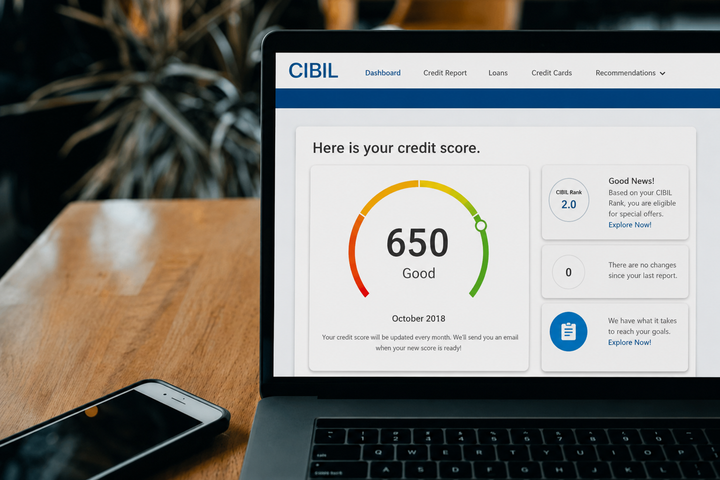
credit score matters less for small loans. digital lenders often accept scores as low as 600. some apps like KreditBee and CASHe may not require a CIBIL score at all for first-time borrowers. banks, however, still typically want 700 or higher even for ₹20,000.
employment needs to be stable. salaried applicants need three to six months with their current employer. self-employed applicants need ITR for one to two years and bank statements showing business income.
for a loan this small, the lender focuses more on income stability and how the bank account behaves than on a perfect credit score.
what documents are needed
minimal. three to four documents for most digital lenders. some require only digital verification.
PAN card and Aadhaar are mandatory for everyone. digital lenders also ask for a selfie for verification.
salaried applicants add their last two to three months' salary slips and three to six months' bank statements.
self-employed applicants add ITR for the last one to two years, bank statements for the last six months, and business proof like GST registration, trade license, or MSME certificate.
pre-approved customers of banks like HDFC and ICICI may not need fresh documentation at all. the loan gets credited within minutes.
what repayment looks like
tenure decides the shape of repayment. shorter tenures mean higher EMIs but lower total interest. longer tenures mean lower EMIs but higher total interest.
A ₹20,000 loan at 18% per annum over 12 months means an EMI of roughly ₹1,834 and total interest of about ₹2,010. over 24 months, the EMI drops to ₹998 but total interest rises to ₹3,955. over 6 months, the EMI jumps to ₹3,500 but total interest falls to ₹1,000.
processing fees on small loans range from 1% to 3% plus GST. on ₹20,000, this is ₹200 to ₹600. deducted from the disbursed amount.
missing an EMI costs ₹500 to ₹1,500 per instance. but the bigger cost is credit damage. it gets reported to credit bureaus and stays on the credit report for years.
prepayment terms matter too. some lenders charge 2% to 4% of the outstanding amount plus GST. many digital lenders allow early repayment without charges.
on taxes: personal loans are not taxable when taken. the interest paid does not qualify for any deduction under the Income Tax Act. it is a consumption loan. no Section 24 or 80C benefits apply.
making the process faster
Aadhaar and PAN should be linked and verified on the lender's app before applying. pre-approved offers from existing banks are often the fastest route. for small amounts, digital apps beat banks on speed. verifying that the lender is RBI-registered matters. multiple applications should be avoided because each hard enquiry affects the credit score by 5 to 10 points. and if gold is available, a gold loan is often the fastest and cheapest option for ₹20,000.
frequently asked questions
1. how fast can the money arrive?
pre-approved bank customers: under a minute. digital apps: 5 to 15 minutes for approval, up to 24 hours for disbursal. gold loans: 30 to 60 minutes. the route chosen decides the speed.
2. what if there is no CIBIL score at all?
digital lenders are more forgiving. kreditBee and CASHe often approve first-time borrowers with no credit history. some apps skip the CIBIL check entirely and look at bank statement patterns. banks want 700+. the trade-off: easier approval usually means a higher rate. gold loans sidestep the credit question for amounts up to ₹2.5 lakh.
3. is there a penalty for early repayment?
depends on the lender. some charge 2% to 4% of the outstanding amount plus GST. many digital lenders allow it for free. for ₹20,000, the penalty is usually a few hundred rupees at most. the loan agreement will say.
4. does a small loan hurt the credit score?
not if EMIs are paid on time. A small loan repaid on schedule can actually help build credit history especially for first-timers. damage happens when payments are missed. late fees of ₹500 to ₹1,500 are the immediate cost. the bigger cost is the missed payment sitting on the credit report for years. multiple applications in a short period also hurt each hard enquiry shaves 5 to 10 points.