how much loan can I get on agricultural land?
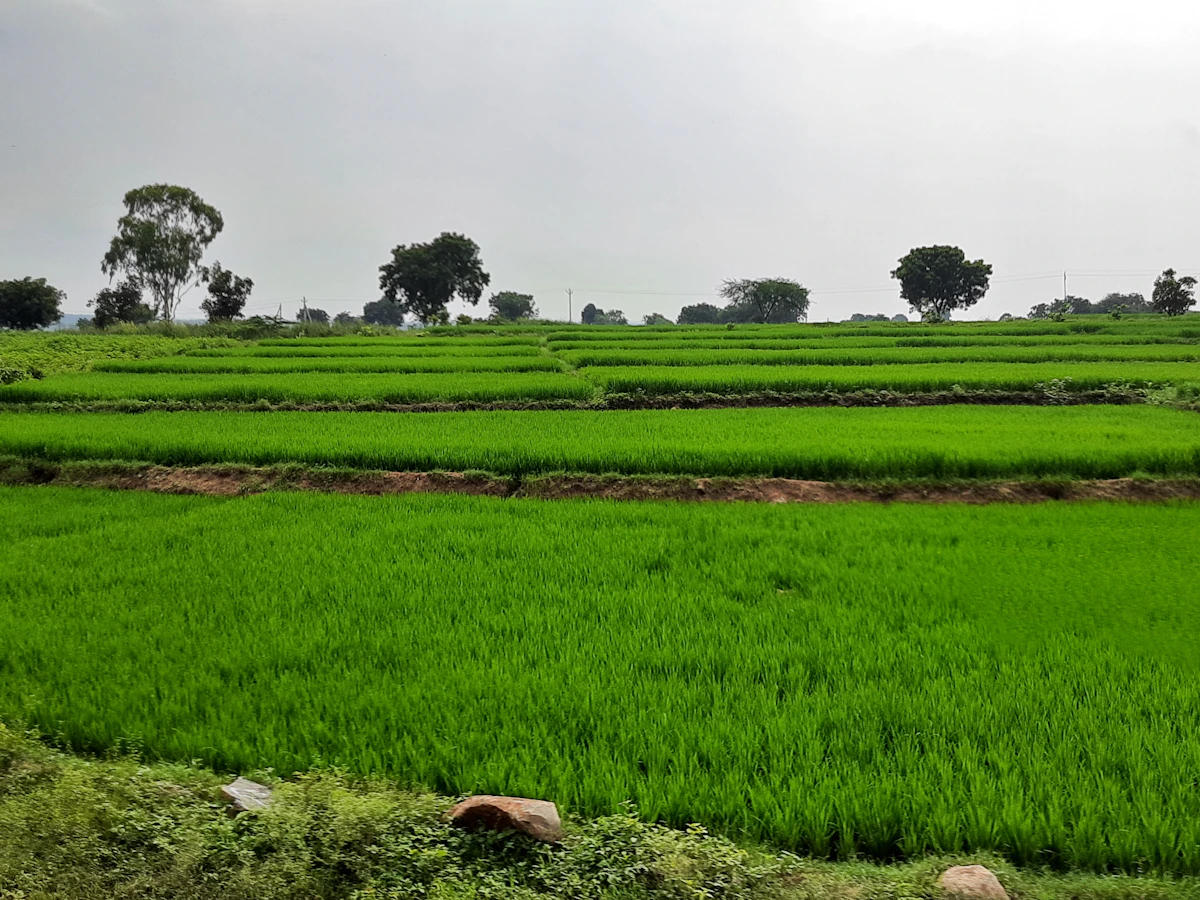
the size of a loan on agricultural land is set by the market value of the land and the share of that value a lender is willing to finance. most lenders sanction 40% to 70% of the assessed market value, and a few stretch to 75% for borrowers with a strong credit profile. on land valued at ₹50 lakh with a 60% loan-to-value ratio, that works out to a loan of ₹30 lakh.
the same land can support different amounts at different lenders, because policies, the location of the plot, the type of property, and the borrower's repayment capacity all feed into the decision. land in a prime agricultural belt is valued higher than a remote or less fertile plot, and a weaker credit profile usually pulls the sanctioned share down rather than raising the interest rate alone.
the percentages, rates, and fees described here are indicative, they differ across banks and NBFCs and change over time, so the numbers that apply to a specific case are the ones the lender confirms in writing.
how lenders calculate a loan against agricultural land
the calculation runs on the loan-to-value ratio, or LTV, which is the percentage of the assessed property value that the lender is prepared to finance. for agricultural land most lenders cap this between 40% and 70%, so land assessed at ₹50 lakh with an LTV of 60% supports a maximum loan of ₹30 lakh.
the balance stays with the borrower as margin, and that gap is what protects the lender if land values fall or the loan is not repaid. public sector banks tend to be the more conservative side of the market at around 50% to 60%, while private banks and NBFCs are more flexible and some go up to 70% or 75%.
what affects the loan amount on agricultural land
land value and location
the assessed value of the land is the single largest input. lenders either apply government valuation guidelines or send a surveyor to inspect the plot, and land in prime agricultural areas is valued higher than land that is remote or less fertile.
land type and title
cultivable land is preferred, and non-cultivable or barren land tends to attract a lower LTV. land with clear ownership documents gets better terms, while land under legal dispute is usually rejected outright rather than funded at a reduced amount.
purpose of the loan
loans taken for agricultural purposes such as equipment, irrigation, or seeds often carry better terms than loans taken for unrelated needs, which may be sanctioned at a lower LTV or a higher rate. some lenders restrict the use of funds to farm-related expenses altogether, and that restriction is written into the loan agreement.
borrower profile
a CIBIL score of 750 or above is the preferred band, and lower scores are typically met with a lower LTV or a higher rate instead of a flat refusal. steady agricultural income or another dependable income source improves the assessment, while existing loan repayments reduce how much fresh borrowing capacity is left.
lender policy
each lender works to its own rules, with public sector banks applying stricter norms and NBFCs allowing more flexibility. digital platforms may show a pre-approved amount based on an existing relationship, which is an indication rather than a final sanction.
typical loan amounts on agricultural land
| land value | typical LTV | loan amount range |
|---|---|---|
| ₹10 lakh | 50-60% | ₹5-6 lakh |
| ₹25 lakh | 50-60% | ₹12.5-15 lakh |
| ₹50 lakh | 50-60% | ₹25-30 lakh |
| ₹1 crore | 50-60% | ₹50-60 lakh |
borrowers with strong credit are sometimes offered 70% or 75%, which on land worth ₹50 lakh would mean a loan of ₹35 lakh to ₹37.5 lakh. loans that qualify under priority sector lending or a government scheme can come with lower rates and more flexible terms, and eligibility for those is decided by the scheme rather than the lender alone.
eligibility for a loan against agricultural land
| requirement | what lenders usually look for |
|---|---|
| age | 21 to 65 years at loan maturity, extended to 70 by some lenders |
| residency | Indian resident |
| credit score | 750 or above preferred, lower scores accepted at higher rates |
| land ownership | clear title and ownership documents, land free of legal dispute |
| income proof | agricultural income records, bank statements, or ITR, mainly for larger amounts |
| land area | a minimum area in some cases, varying by region and lender policy |
meeting these conditions shortens the approval timeline. falling short on any of them tends to reduce the sanctioned amount rather than stall the file, except where the title itself is unclear, which is usually a reason for rejection.
documents required for a loan against agricultural land
| document | what is accepted |
|---|---|
| identity proof | PAN card is mandatory, with Aadhaar, voter ID, or passport as secondary proof |
| address proof | Aadhaar usually covers this, and a recent utility bill or rent agreement works when the Aadhaar address is outdated |
| land ownership | original title deed, jamabandi or land records, mutation papers, and property tax receipts |
| encumbrance certificate | confirmation that the land carries no legal dispute or outstanding liability |
| income proof | salary slips for salaried applicants, six months of bank statements, ITR for self-employed applicants, agricultural income records for farmers |
| photographs | recent passport-sized photographs |
additional papers are common on larger loans and unusual plots, including land survey reports, location maps, and no-objection certificates.
interest rates and fees on an agricultural land loan
because the land is pledged as collateral, rates are lower than on an unsecured loan of the same size. interest typically starts at around 9% per annum and rises with the borrower's profile, the loan amount, and the tenure, and NBFC rates generally sit above those of public sector banks.
processing fees run from 0.5% to 2% of the loan amount, though some lenders charge a flat amount instead, and the fee is either deducted from the disbursal or added to the loan. prepayment charges of 2% to 4% of the outstanding amount apply at some lenders while others allow early repayment without penalty, and late payment penalties differ widely, which makes both worth reading in the sanction letter before signing.
what to watch out for before pledging agricultural land
- a borrower's own estimate of land value often sits above the lender's assessment, since lenders apply their own valuation method, and an independent professional valuation before applying gives a more realistic starting point
- the LTV cap means only part of the land value is financed, so the remaining requirement has to come from elsewhere, and planning for that gap in advance avoids a half-funded purchase or project
- public sector banks usually offer lower rates with stricter terms while NBFCs price higher for more flexibility, and comparing the two on total cost rather than rate alone gives a clearer picture
- unclear or disputed title is a common reason for rejection, and checking the land records and encumbrance certificate before applying prevents a wasted application
- the approved amount is a ceiling and not a target, since drawing more than the requirement raises both the EMI and the total interest paid over the tenure
- the land itself secures the loan, which means a default allows the lender to take possession and sell it to recover the dues, a risk that does not exist with unsecured borrowing
frequently asked questions
what is the maximum loan-to-value ratio for agricultural land loans?
most lenders offer 40% to 70% of the land's market value, and some go up to 75% for borrowers with strong credit. the exact LTV depends on the lender and on the borrower's profile.
how is land value determined for loan purposes?
lenders apply their own valuation methods, either by sending a surveyor to inspect the land or by using government valuation guidelines. the resulting figure is often lower than the owner's own estimate, and the loan is calculated on the lender's assessment.
is a loan on agricultural land possible without income proof?
some lenders do not insist on income proof for smaller amounts. for larger loans it is usually required, and agricultural income records, bank statements, or ITR are all accepted.
what documents are required for a loan against agricultural land?
identity proof, address proof, land ownership documents, an encumbrance certificate, and income proof form the standard set. lenders may ask for more depending on the loan amount and the nature of the plot.
can a loan against agricultural land be used for non-agricultural purposes?
some lenders permit it while others restrict the funds to farm-related expenses, and using the money outside the permitted purpose can affect both the interest rate and continued eligibility. the loan agreement states which uses are allowed, and that clause is worth reading before the application goes in.